When we plant on ground that’s already semi-established, meaning it doesn’t need to be smoothed out or graded, we no-till. Tilling means turning over the soil before planting. No-till avoids that, disturbing the ground only as much as it takes to get the seed in.
Conventional tillage is only really required if you’re trying to stimulate the growth of forbs, or broadleaf flowering plants like wildflowers, which we may have reason to do. In almost every other case, we will always use no-till. It’s one of the constant barometers in how we manage land and make it better.
Retaining What Healthy Soil Needs Most
What’s under our feet is often overlooked, but it’s where the work starts. Healthy soil is held together in small clumps, with tiny channels between them. Those spaces let rain soak in instead of running off, let roots grow down, and let air reach the life living in the dirt. Tillage breaks the clumps apart. The loosened soil tends to settle, crust over, and wash or blow away more easily.
Rebuilding structure takes years, so a single pass can undo a lot of slow work. No-till leaves it intact, which is also why intact soil stays where it belongs on a slope.
Turning soil over also exposes the damp layer to sun and wind so that the moisture evaporates. Leaving the ground undisturbed, with the duff or leaf litter on top, shades the surface and slows that loss. The soil holds more of the water it already has, which helps seed germinate and plants get through dry stretches. It also keeps rain from hitting bare ground, which can seal the surface and cause runoff. Structure and moisture work together: better structure means more water absorbed and held, and a protected surface means less lost.
With no-till, the all-important layer of decomposing leaves and plant material on top of the ground, breaks down into an organic mulch for the property. Tilling buries it. No-till also protects the bacteria and small bugs in the dirt, which is the microbial life that makes soil work.
Experts have preached no-till for years, and they’re exactly right. There’s a reason it’s better.
Germinating Land Management Success
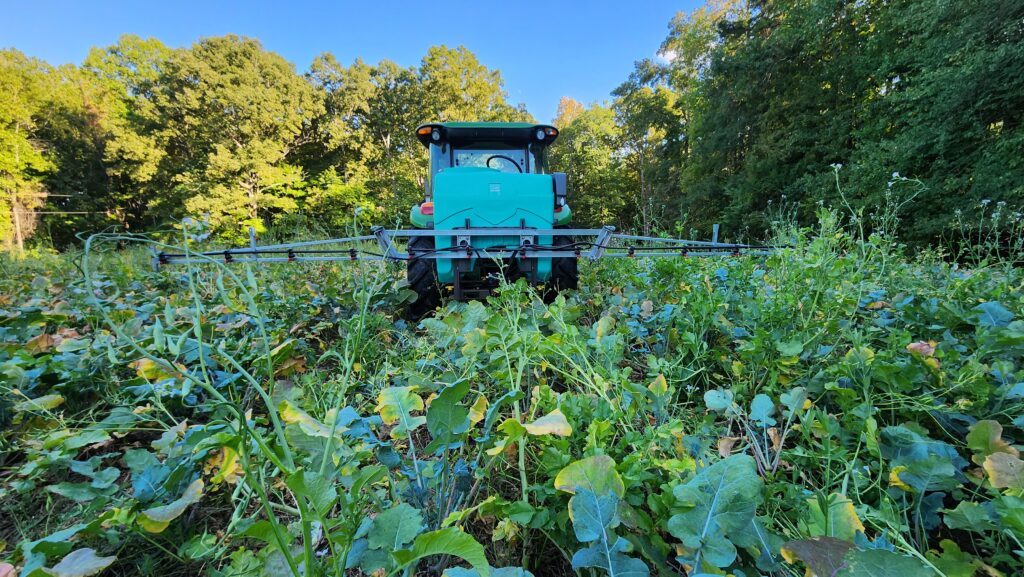
There’s a practical side, too. The seed drills we use for no-till puts seeds in at the right depth, consistently, which means proper seed depth and good germination with minimal disturbance.
From there, we build on success. We pair no-till management with cover cropping to improve soil over time, planting non-cash cover crops that reduce erosion, add organic matter, and biologically suppress weeds. Together, these practices can reduce the cost of herbicides and fertilizer while building a healthier system that supports more kinds of plants.
The savings are real. For one client, we restored 45 acres of non-forested open area and continue to manage it for soil health. In just 18 months of an intentional soil health program, we were able to eliminate the fall fertilizer and herbicide treatments on that acreage, saving the client nearly $18,000. Not only did that save money, but we are moving closer to eliminating the need for synthetic soil amendments.
For all of these reasons, Poplar continues to lean heavily on no-till practices for land management success. Depending on your goals, we might build soil health to attract wildlife, support livestock, conserve dwindling grassland habitat, store more carbon, or make open land attractive and turnkey for many different kinds of buyers. However you use your land, no-till helps the soil and therefore improves the value of the land.
If you’d like a tailored Transform or Manage plan or a Legacy Property design for your property, request a free consultation, or learn more about our Acquire, Transform, and Manage process.