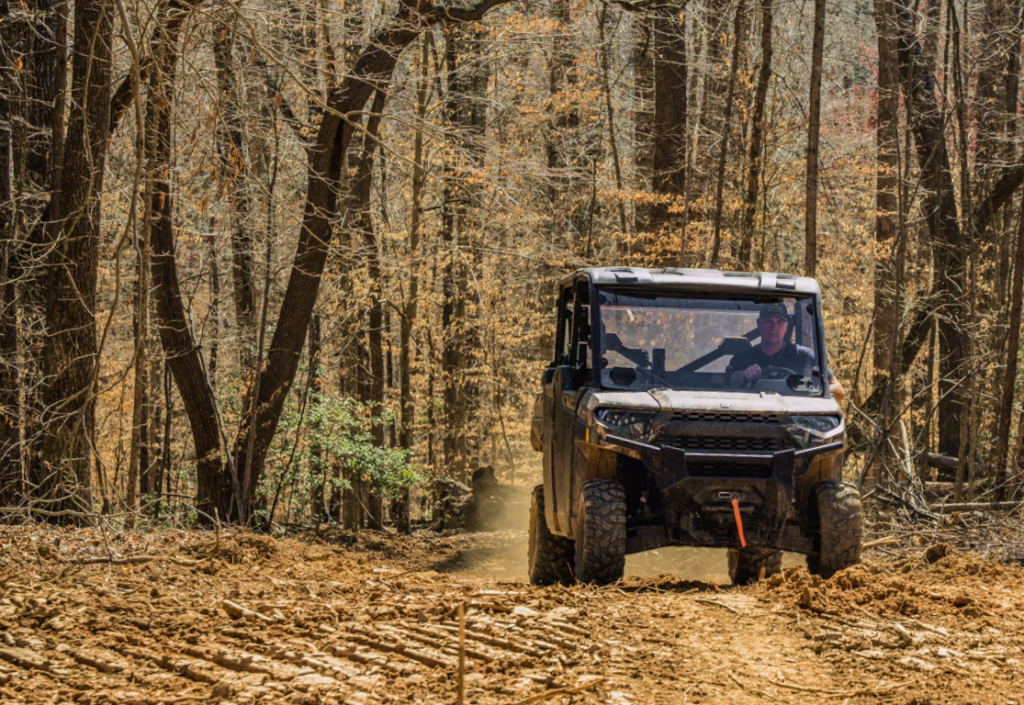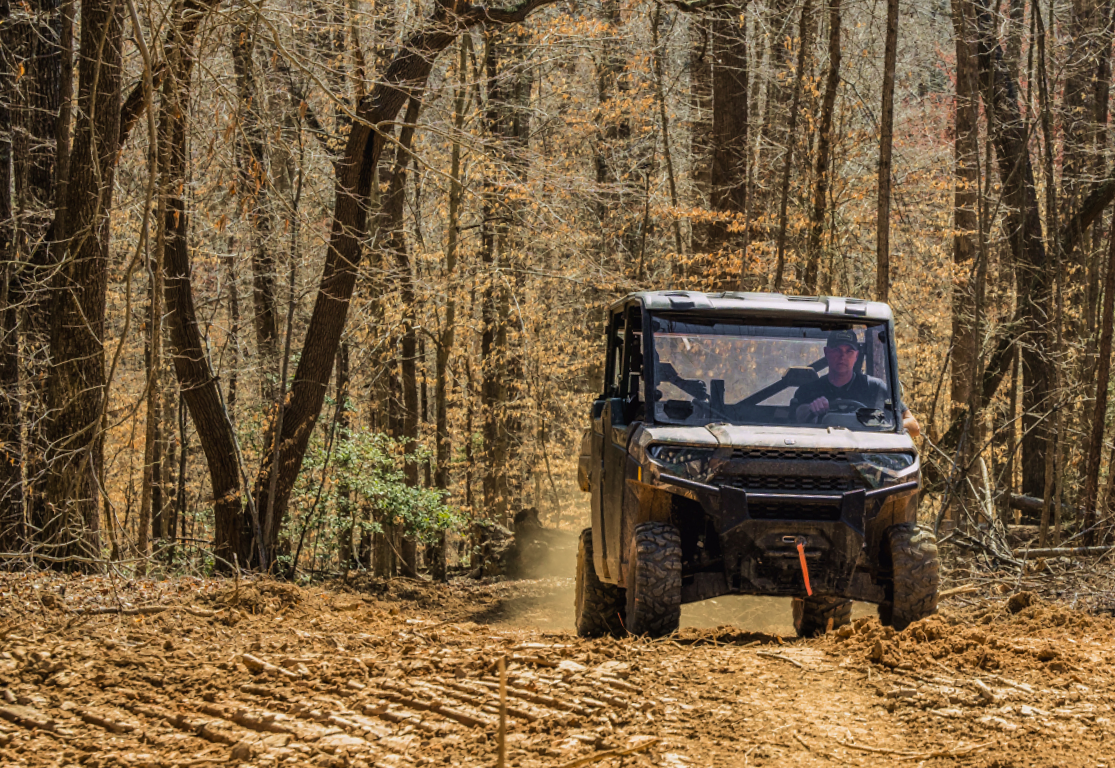
Ask us what to do first on a raw tract of land, and the answer is usually create trails. They’re one of the simplest ways to put a property to work, and the reasoning goes well beyond how they look on a map. A good trail does several jobs at once, and each one makes the land more useful and valuable to the person who owns it.
Trails turn acres into rides, hikes, and family weekends.
Landowners see the benefit of trails right away and, if you ever need to sell, buyers can immediately picture how they’ll enjoy these areas. A trail turns acreage on paper into a place with something to do, whether that’s driving ATVs, hunting, hiking, or riding bikes or horses. We even put an archery range along one set of trails.
Every property with trails is instantly more valuable. Period.
The value shows up in two places: the recreation you get out of the land now, and the monetary value it adds for whoever holds it next.
[Curious what is happening with land values in the Carolinas and Virginia right now? Our brokers share their on-the-ground experience in the market—download our 2026 Rural Land Trends Report to learn more.]
A trail system makes the property feel bigger.
Trails add perceived scale, and a parcel that reads as larger tends to be worth more. At a recent Poplar dove hunt, we asked guests to estimate the acreage of the property after riding the trail system. Many visitors guessed 100 to 200 acres when it was actually only 60 acres. That means we’ve done our job.
It’s easier and more cost-efficient to manage land with trail access.
The same routes you’d ride for fun are the ones you’ll use to maintain the land with tractors and other equipment. Getting machinery to where the work is, without cutting a new path every time, means less time and fewer dollars spent on every job.
Trails are also effective as fire breaks.
This gives you a line of defense against a wildfire you didn’t plan for, and a controlled edge for the one you did. For owners using prescribed fire to hold open ground, maintain views, and manage timber economically, a trail network that doubles as a firebreak means one investment doing two jobs.
A good trail does several jobs at once, and each one makes the land more useful and valuable to the person who owns it.
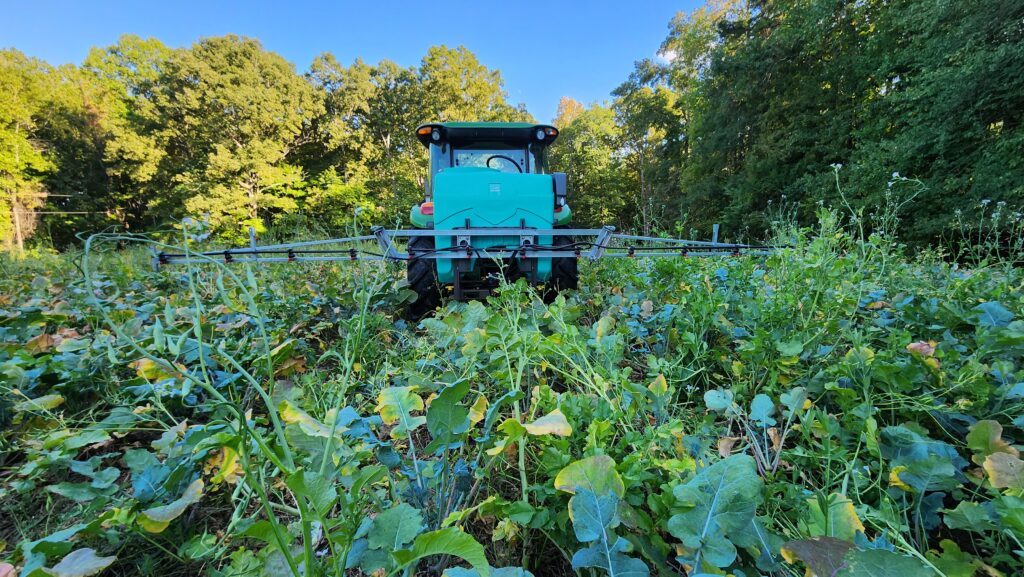
The edges can be planted to stabilize the ground and feed wildlife.
Once grading is done on roads and trails, we often plant a 30-foot border along the field edges in a clover mix, a perennial that inhibits erosion and gives animals a food source. That matters on steeper ground, where grading too aggressively can create erosion problems of its own, and on land that will be hunted. We call it one idea with multiple benefits.
Sometimes trails are already there.
The fastest, lowest-cost way to unlock a tract is often reopening old skidder roads left from a past timber harvest. Many are already bedded and water-barred, so they can often be brought back with a just skid steer and mulching head—not expensive heavy equipment.
Creating trails is just one kind of improvement we recommend to get the most land value out of your investment. Download our guide, 5 Land Improvements That Return Double the Value (or More), to see the methods we use on almost every property.
Ready to Book Trail Work on Your Land?
If you’d like a tailored Transform or Manage plan for your property, request a free consultation today.