Location: Danbury, Stokes County, NC
Acreage: 66.5 acres
Price: $875,000
Explore the Listing: https://poplarland.com/land-for-sale/seven-island-rd/
Best Use(s) for this Land
- Legacy property
- Single-family residence
- Recreation property
- Second home
- Investment property
Transformation Overview
Guaranteed value move
Upgrade former logging roads into a usable trail system
Core improvements
- Create better access to existing house, which needs work
- Expand open field space along the river for camping, wildlife, and views
- Test soils at two additional potential building sites
- Clear building sites and plant native grasses or food plots until ready for construction
- Selectively clear trees for better views and wildlife habitat
Maintenance plan
Manage timber economically and prevent erosion with prescribed fire
Exit strategy
Create road bisecting the property, laying the groundwork for two tracts, each with a build site
The Poplar Plan
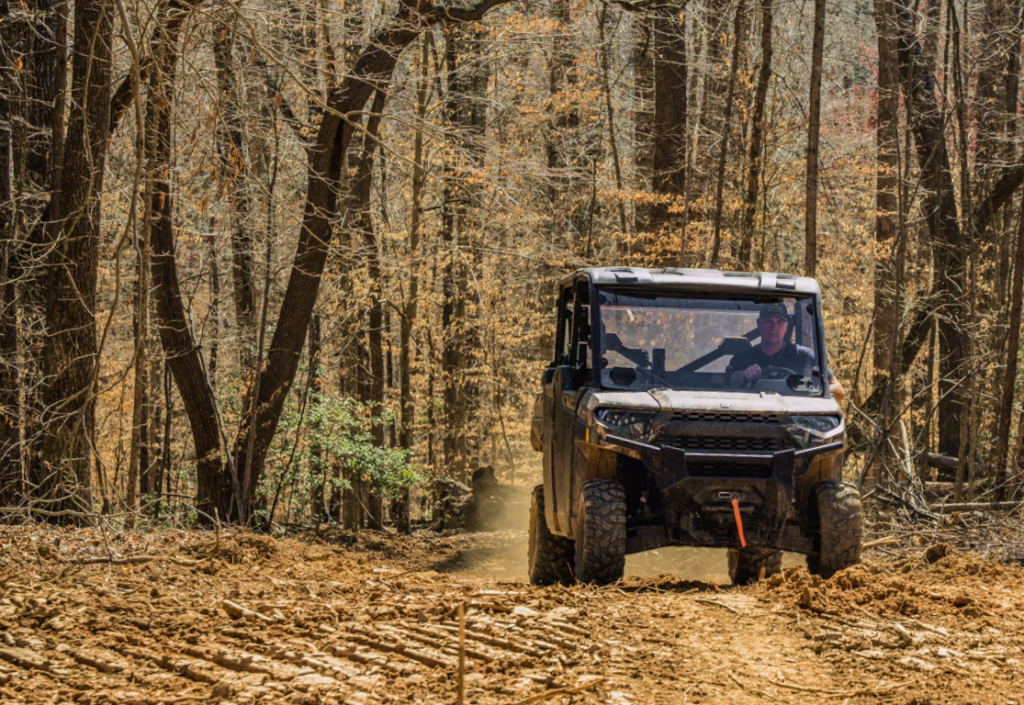
Trails first. The old skidder roads left behind from the property’s last timber harvest are the fastest, cheapest way to unlock this land. Most are already bedded and water-barred, so in many cases they can be reopened with a skid steer and mulching head — no heavy equipment required. Trails don’t just add access. They add perceived scale. At a recent Poplar dove hunt on an improved 60-acre tract, guests estimated the property at 100 to 200 acres once they’d ridden the trail system. And trails typically return at least double their cost in added value.
Improve access to the existing house. Right now, the only real road on the property runs from the north gate down to the old house and bottom field. Historical aerials show a second connection once linked that house site to Seven Island Road further west. Reopening it would create a second point of entry and set up a natural east-west split of the property in the future.
Test soils at two additional building sites. Two more potential home sites have been flagged by topography, in addition to the existing house. Soil testing would validate the sites and remove a due-diligence pain point for the future owner. It’s the kind of groundwork that shortens time to close and strengthens a seller’s position.
Clear building sites and plant natives or food plots. Once cleared, each home site becomes usable immediately rather than sitting as a future expense. Native grasses or food plots turn the spaces into meadows, wildlife draws, or food sources, while the land banks value toward an eventual build.
Selectively clear trees for views and wildlife habitat. This was a recent select harvest, so the highest-value timber is likely already gone, meaning any further cutting here is about aesthetics and wildlife, not revenue. In this part of North Carolina, the target species (deer, turkey, bear) are edge animals that do better with more open, managed ground than with a solid timber block. On steeper terrain, cutting and seeding to native grass will preserve the view without the erosion risk of stumping a slope.
Manage with prescribed fire. Long-term, fire is the cost-effective way to hold open ground and maintain views, all while avoiding the erosion that comes with more aggressive grading on bluff country like this.
Exit strategy: A bisecting road. Splitting the property roughly along the ridge sets up two build-ready tracts down the line, each with its own home site. It’s the long-game play. If the cost of trails, clearing, and management stays below the value created by the eventual split, the improvements pay for themselves before the land ever changes hands again.
How You’ll Enjoy It
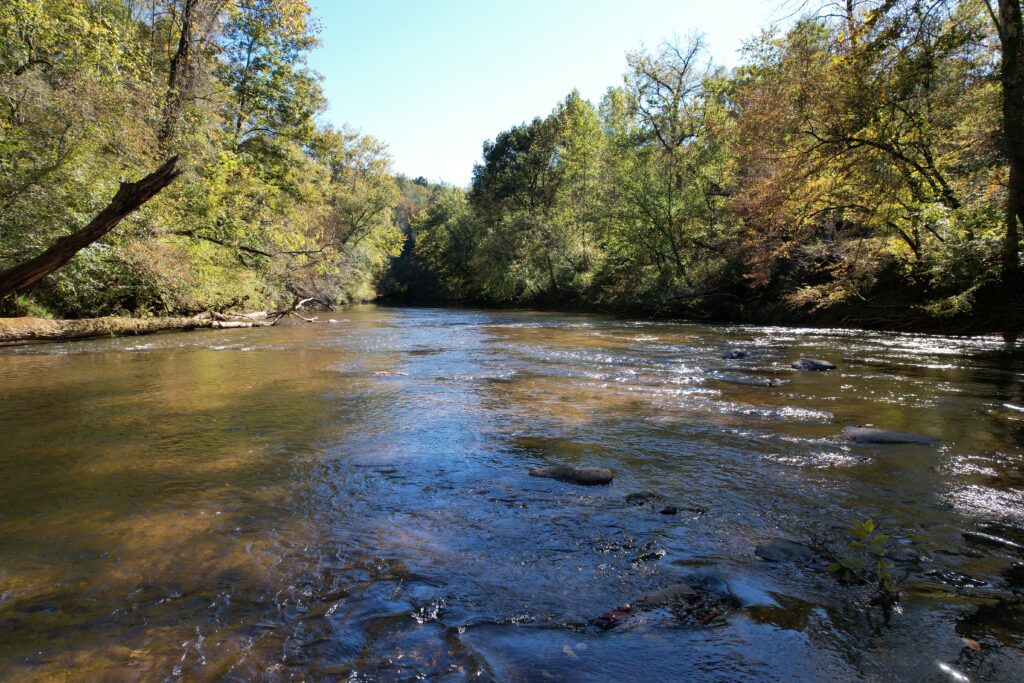
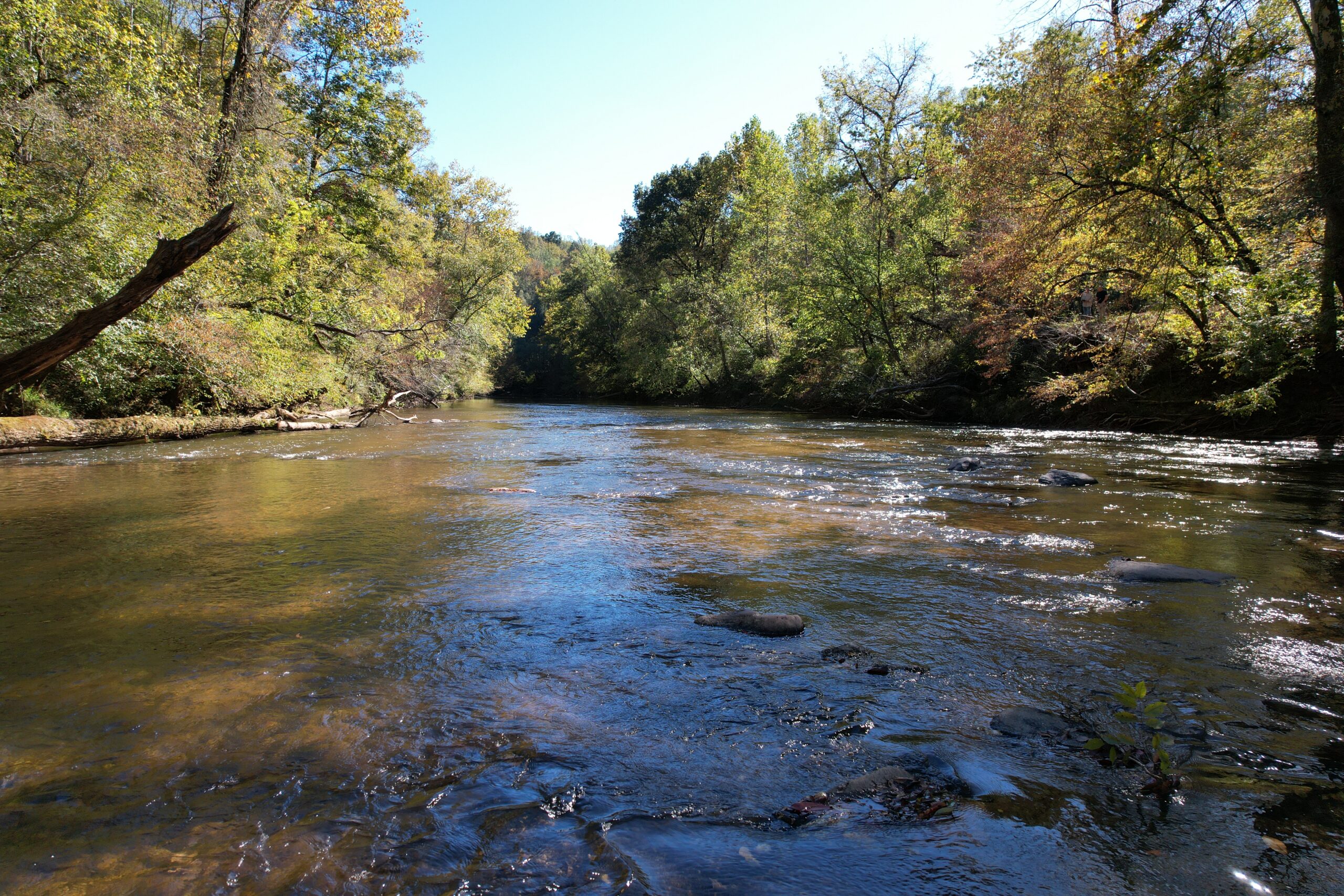
The Dan River frontage is the standout amenity here. Put in from the property and you’ve got a ready-made float trip for smallmouth with a pickup point downstream. It’s the kind of access most people only get by floating a public put-in. Here, it’s right out your back door.
On land, expect to see deer, turkeys, bears, and a good mix of small game. With the trail system and selective clearing in place, those edge habitats only get better, with more wildlife viewing, more hunting opportunity, and open ground that doubles as space for camping, food plots, or just enjoying the property day to day.
Whether the end use is a primary residence or a second home, this is a tract built for full-time recreational use — river access, wildlife, and trails that make it feel a lot bigger than 66.5 acres.
Estimated Impact
We’re careful not to over-promise, but a few benchmarks from Poplar’s track record hold up here:
Trails: 2x return, minimum. As a rule of thumb, a $10,000 investment in reopening and grading trail systems returns roughly $20,000 in added value — often more, depending on how much of the old logging road network is still intact and how limited current access is. Beyond the appraisal bump, trails make a property show better and sell faster.
Pre-listing groundwork shortens the runway to close. Soil testing the two additional building sites now, rather than leaving it to a future buyer’s due diligence, removes a point of friction and negotiation leverage before it comes up.
Cleared home sites aren’t dead capital. Once cleared and seeded with native grasses or food plots, those areas are immediately useful as wildlife habitat, food plots, or open recreational space, while the land appreciates toward an eventual build.
The exit strategy pencils out on its own. If the cost of trails, clearing, and management stays below the value created by an eventual east-west split into two build-ready tracts, the improvements more than pay for themselves before the land changes hands again.
The net effect: A property that today reads as a single, somewhat inaccessible tract becomes a larger-feeling, more usable, and more valuable piece of ground — whether the next owner keeps it whole for a lifetime or eventually divides it into two.
Bottom Line
Add open space at the two ridge home sites, reclaim as much open ground as possible along the river bottom, and put in trails. Do that, and a 66.5-acre tract on the Dan River stops feeling like a single hard-to-access parcel and starts feeling like the kind of place you can live on, hunt, float, and pass down for generations.
Want more land transformations and expert guidance on growing land value? Sign up to receive our Advancing the Plot email.